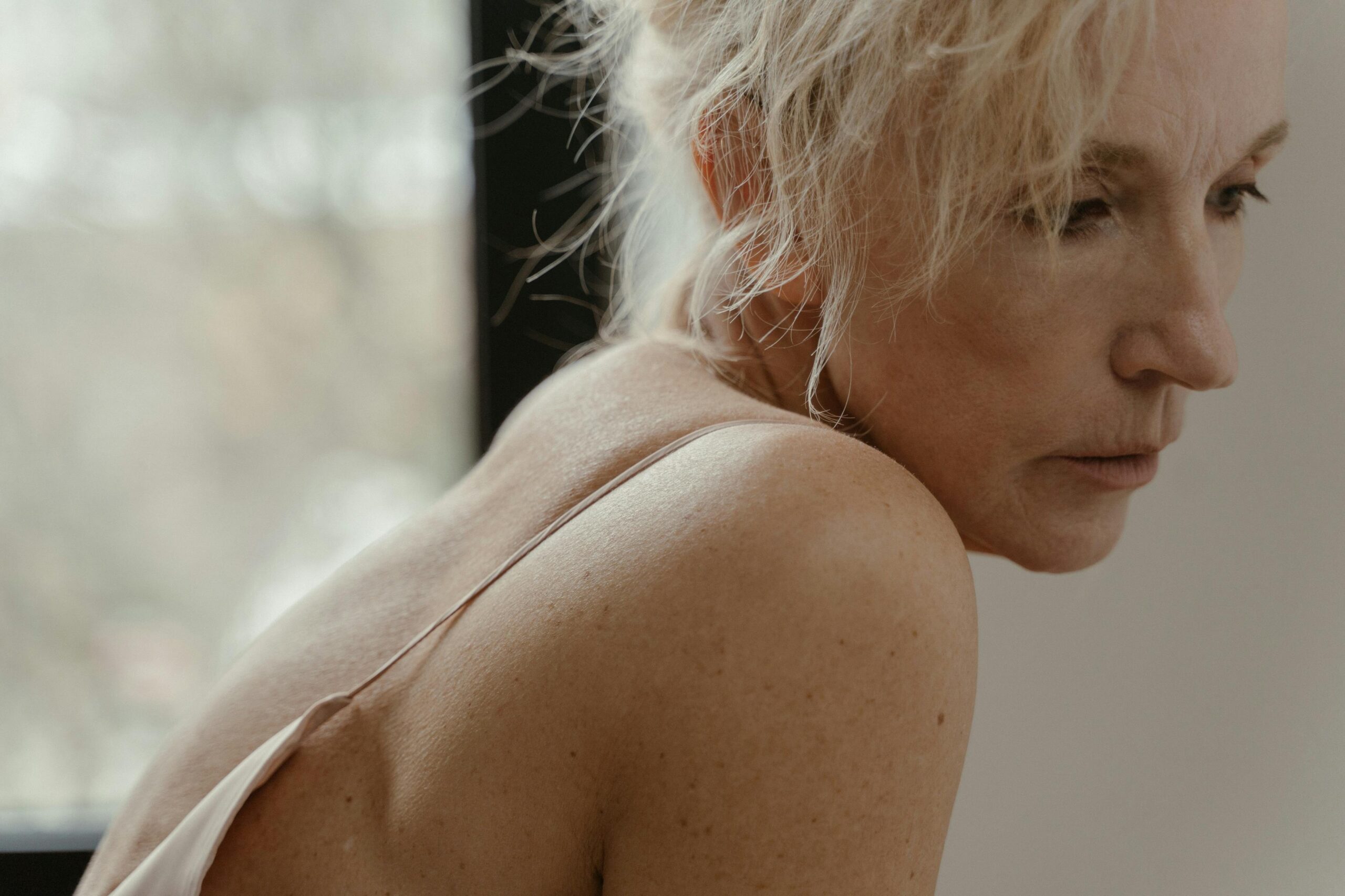

During menopause, your skin changes and estrogen levels drop significantly. Estrogen is one of the key hormones responsible for keeping skin plump, hydrated, and resilient. When levels decline, the changes can be surprisingly fast and noticeable:
-
Collagen loss: Women may lose up to 30% of their skin’s collagen in the first five years of menopause. Less collagen means less firmness and elasticity.
-
Thinner skin barrier: Skin may feel more fragile, sensitive, and prone to irritation.
-
Dryness and dullness: Without estrogen’s oil-regulating effect, skin tends to become dry and uneven in tone.
-
Slower healing: Cuts and blemishes may take longer to fade.
In short: menopause skin changes can feel just as disruptive as teenage skin shifts, only with different challenges.
Table of Contents
Common Menopause Skin Changes
Here are the issues women most often notice during this stage of life:
-
Fine lines and wrinkles: Accelerated collagen loss shows up around the eyes, mouth, and forehead.
-
Sagging skin: Cheeks and jawlines may look softer and less defined.
-
Dry, itchy patches: Flakiness or irritation becomes more frequent.
-
Unexpected breakouts: Hormonal fluctuations can still trigger acne.
-
Uneven tone: Dark spots or redness may become more visible.
These skin changes may be common, but they don’t have to feel unmanageable.
Supporting Your Skin Through Menopause
While you can’t stop hormonal changes, you can help your skin adapt.
-
Stay hydrated: Inside and out, with water and moisturizers that include hyaluronic acid or ceramides.
-
Protect daily: Sunscreen is non-negotiable since menopausal skin is more vulnerable to UV damage.
-
Be gentle: Switch from harsh scrubs to mild cleansers and soothing formulas.
-
Encourage collagen: Treatments that stimulate collagen, like microneedling or injectables such as Sculptra, can restore firmness gradually.
-
Seek expert care: Professional facials designed for hydration and skin renewal can target concerns that at-home routines often can’t.

The Emotional Impact of Menopause Skin Changes
Think back to your teen years. Breakouts, oiliness, and sudden changes weren’t just physical problems—they carried emotional weight, too. Menopause often echoes that feeling. Suddenly, you’re learning a new version of your skin and figuring out how to care for it.
The difference now? You have resources, knowledge, and access to professional support. Instead of trial and error, you can choose treatments tailored to your needs and backed by science.
Embracing the Transition
Rather than viewing menopause skin changes as a battle, reframing them as a natural transition can help. With the right care, your skin can remain vibrant, strong, and radiant. Many women even find this stage is when they finally invest in skin health treatments that make them feel confident and cared for.
Final Thoughts
Menopause brings visible shifts that often go unspoken, but knowing what’s happening beneath the surface helps you take back control. By treating these changes with patience, support, and a thoughtful skincare approach, you can navigate this stage with confidence.
Your skin isn’t giving up, it’s simply asking for new ways of care.
Ready to Talk About Your Skin?
If you’re curious about which treatments can best support you through menopause skin changes, we invite you to book a call with our experts. No strings attached, just professional guidance to help you understand your options and feel confident in your skin again.
–