Crow’s Feet
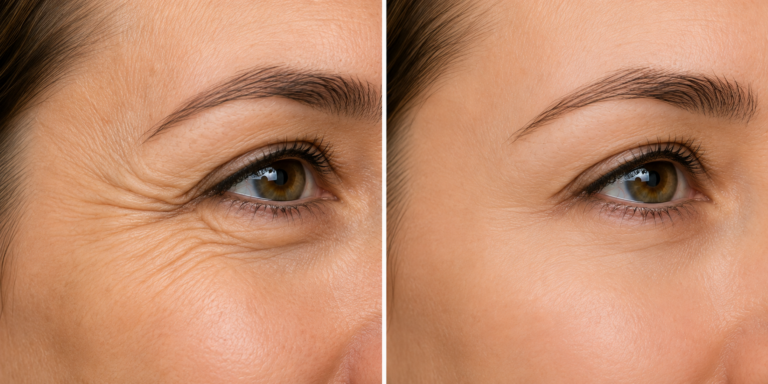
Crow’s feet are the fine lines and wrinkles that develop around the outer corners of the eyes. At first, you may only notice them when you smile or squint. Over time, those lines can become more noticeable even when your face is relaxed.
For many people, the goal isn’t to eliminate every line around the eyes. After all, some movement around the eyes is part of a natural smile. The concern is often when the lines become deeper, the skin begins to look crepey, or the eye area starts appearing more tired or aged than you feel.
At AIVI Aesthetics in Agoura Hills, we take a natural, skin-forward approach to crow’s feet. We look beyond the wrinkle itself and evaluate facial movement, collagen loss, skin quality, sun damage, and the delicate skin surrounding the eyes.
Our goal is to help your eyes look rested, refreshed, and natural—without making your expression look frozen.
What Are Crow’s Feet?
Crow’s feet are the lines that extend outward from the corners of the eyes.
They are also known as lateral canthal lines or smile lines around the eyes.
They develop primarily because the circular muscle surrounding the eye—the orbicularis oculi—contracts when you:
- Smile
- Laugh
- Squint
- Blink
- Make facial expressions
When we’re younger, the skin usually returns to its resting position after these movements.
As collagen and elastin gradually decline, the skin becomes less resilient. Repeated folding eventually leaves lines that may remain visible even when you’re no longer smiling.
Why Do Crow’s Feet Develop?
Crow’s feet are influenced by more than facial expressions.
The skin surrounding the eyes is naturally thin and delicate, making changes in collagen and elasticity especially noticeable in this area.
Common factors contributing to crow’s feet include:
- Repeated smiling and squinting
- Natural collagen loss
- Decreased skin elasticity
- Sun and UV exposure
- Genetics
- Skin dehydration
- Hormonal changes
- Smoking
- Environmental exposure
- Natural aging
Sun exposure can be particularly important because ultraviolet radiation contributes to collagen breakdown and premature skin aging.
Over time, you may notice not only lines but also thinner, drier, or more crepey-looking skin around the eyes.
Dynamic vs. Static Crow’s Feet
One of the most important things to determine is whether your crow’s feet are dynamic or static.
Dynamic Crow’s Feet
Dynamic crow’s feet appear primarily when you smile or squint.
These lines are strongly influenced by the movement of the muscles surrounding the eyes.
Neuromodulators such as Botox®, Dysport®, Xeomin®, Jeuveau®, or Daxxify® may be used to temporarily reduce excessive muscle contraction and soften these lines.
Static Crow’s Feet
Static crow’s feet remain visible even when your face is relaxed.
Once this happens, the concern may involve more than muscle movement.
Collagen loss, sun damage, thinning skin, dehydration, and changes in skin elasticity may all contribute.
For these patients, simply treating the muscle may not fully address the appearance of the skin.
A combination approach focused on movement + collagen + skin quality may provide a more comprehensive result.
Treatments for Crow’s Feet
There isn’t one treatment that is right for everyone.
Some patients primarily need excessive muscle movement softened. Others have significant skin changes that require collagen stimulation or resurfacing.
At AIVI Aesthetics, your treatment plan is based on what is actually causing your crow’s feet.
-
Neuromodulators
Neuromodulators are one of the most commonly used treatments for dynamic crow’s feet. Options may include: Botox® Dysport® Xeomin® Jeuveau® Daxxify® Small amounts are strategically placed around the outer eye area to temporarily reduce the muscle activity responsible for repeatedly folding the skin. The goal isn't necessarily to eliminate every line. Your eyes are an important part of your facial expression, especially when you smile. We focus on softening excessive movement while maintaining a natural-looking expression whenever appropriate. You should still look like yourself.
-
CO2 Laser Resurfacing Around the Eyes
When fine lines remain visible at rest or the skin around the eyes has become noticeably crepey, improving the skin itself may be important. Tetra Pro CO2 laser resurfacing can stimulate collagen remodeling while improving fine lines, texture, sun damage, and overall skin quality. Treatment intensity can be customized depending on your skin and goals. For appropriate patients, lighter resurfacing such as CoolPeel® may be considered for the delicate eye area, while more established wrinkles may require a different resurfacing approach. A consultation is important because laser treatment around the eyes requires careful assessment and appropriate eye protection.
-
RF Microneedling
RF microneedling combines microneedling with radiofrequency energy to stimulate collagen remodeling beneath the skin. Depending on the treatment area and individual anatomy, it may be incorporated into a broader rejuvenation plan to improve: Fine lines Crepey texture Skin quality Mild laxity Collagen loss The goal is gradual improvement in the skin rather than changing the natural shape of your eyes.
-
Microneedling
Traditional microneedling may be appropriate for early signs of aging and overall skin maintenance. Controlled micro-injuries stimulate the skin's natural repair response and collagen production. Microneedling may also be combined with PRF or other regenerative treatments as part of a personalized skin-rejuvenation plan.
-
PRF for the Eye Area
The skin around the eyes can change not only because of wrinkles but also because of declining skin quality. Platelet-rich fibrin (PRF) may be considered for appropriate patients who want a regenerative approach to the eye area. PRF uses components derived from your own blood and may be used to support tissue rejuvenation and collagen production. Rather than creating immediate artificial volume, the goal is gradual improvement in the quality and appearance of the tissue.
-
Medical-Grade Skincare for Crow’s Feet
Treatments performed in the office are only part of maintaining healthier-looking skin around the eyes. A consistent skincare routine may help protect collagen and reduce premature skin aging. Depending on your skin, we may recommend: Daily broad-spectrum sunscreen Antioxidants Retinoids when appropriate Peptides Growth factors Hydrating ingredients Eye-specific skincare Sun protection is especially important. If you're investing in treatments to improve crow’s feet but continuing to expose your skin to significant UV damage without protection, collagen breakdown will continue.
Do I Need Botox or a Laser for Crow’s Feet?
It depends on what you see when your face is relaxed.
If the lines primarily appear when you smile, the concern is likely dominated by muscle movement.
A neuromodulator may be enough.
If you can see the lines when you’re no longer smiling, or the skin looks thin and crepey, skin quality and collagen loss are likely contributing.
In that situation, we may discuss resurfacing or collagen-stimulating treatments in addition to—or instead of—neuromodulators.
For some patients, the most natural result comes from treating both.
Will Botox Around My Eyes Change My Smile?
This is an important concern for patients who want natural-looking results.
The goal should not be to completely remove all movement around your eyes.
Some lines around the eyes during a genuine smile are normal and can contribute to a natural, expressive appearance.
Neuromodulator treatment depends on your anatomy, muscle strength, dose, and placement.
At AIVI Aesthetics, treatment is individualized rather than automatically using the same injection pattern or dose for every patient.
The goal is softer lines—not a different smile.
Can Crow’s Feet Be Prevented?
You can’t completely prevent crow’s feet because smiling and facial expression are normal parts of life.
And we wouldn’t want you to stop smiling just to prevent wrinkles.
However, you can help slow premature skin aging.
Preventative strategies may include:
- Daily sunscreen
- Wearing sunglasses outdoors
- Avoiding excessive UV exposure
- Medical-grade skincare
- Maintaining skin hydration
- Appropriate retinoid use
- Conservative neuromodulator treatments
- Periodic collagen-stimulating treatments
Preventative aging isn’t about starting every treatment early.
It’s about maintaining healthy skin before significant changes develop.
A Skin-Forward Approach to Eye Rejuvenation
Crow’s feet aren’t always simply a “Botox problem.”
If we only focus on stopping muscle movement, we may overlook what is happening to the skin.
The delicate eye area changes with age because of:
Movement.
Collagen loss.
Sun damage.
Skin thinning.
Elasticity changes.
Hydration.
At AIVI Aesthetics, we evaluate all of these factors before recommending treatment.
Sometimes neuromodulators are the right answer.
Sometimes the skin needs resurfacing or collagen stimulation.
Sometimes a combination approach makes sense.
And sometimes maintaining good skincare and sun protection is enough for where you are right now.
The treatment should fit the concern—not the other way around.
Frequently Ask Questions
For crow’s feet that primarily appear when smiling, neuromodulators such as Botox, Dysport, Xeomin, Jeuveau, or Daxxify may help soften the lines. If wrinkles remain visible at rest, treatments that improve collagen and skin quality may also be considered.
Botox and other neuromodulators can temporarily reduce muscle activity responsible for dynamic crow’s feet. Results vary depending on your anatomy, wrinkle depth, muscle strength, dose, and treatment plan.
Yes. Depending on what is causing the lines, options may include CO2 laser resurfacing, microneedling, RF microneedling, PRF, medical-grade skincare, or a combination approach.
Lines that remain when your face is relaxed are known as static wrinkles. They may develop after years of repeated facial movement combined with collagen loss, sun exposure, and declining skin elasticity.
There isn’t one correct age. Treatment depends on your facial movement, skin quality, sun exposure, genetics, and personal goals rather than your birthday.
Natural-looking treatment usually involves respecting your facial anatomy and avoiding unnecessary overtreatment. The goal is often to soften excessive lines while preserving enough movement for your smile to remain expressive.
EXCELLENTTrustindex verifies that the original source of the review is Google. I came to AIVI Aesthetics for Sculptra and a CoolPeel CO₂ laser treatment, and honestly, I couldn’t be happier with my results. What sets this place apart is Angelica’s level of expertise. She’s highly trained in advanced injectables and has such a thoughtful approach. She didn’t just treat one area; she looked at my whole face and created a plan that made everything look natural and balanced. I just look refreshed and glowing. I love that Angelica explains everything and really listens to what you want. I’m already booked for round 2 and cannot wait. If you’re considering investing in your skin, this is the place. You’re in the best hands. 🙌✨Posted on GoogleTrustindex verifies that the original source of the review is Google. I recently got a Cool Peel treatment and I'm honestly blown away by the results. The whole experience was smooth from start to finish. Angelica was knowledgeable, explained everything clearly, and made me feel completely at ease. The treatment itself was surprisingly comfortable, much gentler than I expected. I would absolutely recommend Cool Peel to anyone looking to improve their skin texture and radiance without a long downtime. I'm already looking forward to my next session! TPosted on GoogleTrustindex verifies that the original source of the review is Google. Angelica was so professional and informative on educating me on my options and recommendations. I will definitely be continuing to trust her and use her services.Posted on GoogleTrustindex verifies that the original source of the review is Google. Absolutely thrilled with my experience at Aivi! As a man who was initially self-conscious about seeking aesthetic procedures like Botox, I was a bit apprehensive before my first appointment. However, from the moment I walked in, I felt welcomed and at ease. Angelica Chang took the time to listen to all my concerns and answered every question I had, which really helped alleviate my anxiety. Her professionalism and warm demeanor made a world of difference. She explained the entire process clearly and made sure I was comfortable throughout. The results have exceeded my expectations! I couldn’t be happier with how natural everything looks. I genuinely feel more confident and refreshed. If you’re considering Botox, especially as a man, I highly recommend seeing her. You’ll be in great hands! Thank you for such a wonderful experience!Posted on GoogleTrustindex verifies that the original source of the review is Google. I had the CO2 Tetra Pro laser treatment done ten days ago. The results are phenomenal! The treatment itself was intense but not at all painful. The downtime was minimal! I actually attended a Gala event four days into my recovery!! I highly recommend this procedure. You will be amazed by the results. Thank you Angelica! I will see you soon for more treatments.Posted on GoogleTrustindex verifies that the original source of the review is Google. I received the CO2 Deka Laser treatment 8 days ago and my skin has been transformed. Old deep acne scars, crept textured skin and fine lines have essentially been smoothed and almost non existent now. Highly recommend this procedure for anyone that wants a complete overhaul on their facePosted on GoogleTrustindex verifies that the original source of the review is Google. Very happy with results! Angelica and Rio were incredibly helpful, put me at ease with the procedure (1st time!), very knowledgeable and answered all my questions I had. Can’t wait to come back.Posted on GoogleTrustindex verifies that the original source of the review is Google. Angelica makes sure you are comfortable and takes her time to help you understand what you want.Verified by TrustindexTrustindex verified badge is the Universal Symbol of Trust. Only the greatest companies can get the verified badge who has a review score above 4.5, based on customer reviews over the past 12 months. Read more
Look Refreshed—Without Losing Your Smile
Crow’s feet are part of natural facial expression. You don’t need to erase every line around your eyes to look refreshed.
If those lines are becoming deeper, remain visible when you’re not smiling, or are accompanied by crepey or sun-damaged skin, we can help determine what’s actually contributing to the change.
At AIVI Aesthetics, our approach to crow’s feet focuses on natural expression, healthy skin, collagen preservation, and thoughtful treatment planning.
Depending on your needs, your personalized plan may include Botox or another neuromodulator, CO2 laser resurfacing, RF microneedling, microneedling, PRF, medical-grade skincare, or a combination of treatments.
The goal isn’t to change your eyes or your smile.
It’s to help you look healthy, rested, refreshed, and still like yourself.
Schedule your personalized consultation at AIVI Aesthetics to learn which treatment options may be appropriate for your crow’s feet and overall skin health.
AIVI Aesthetics
Agoura Hills, California
Call or text: (818) 851-9900
We serve patients throughout Agoura Hills, Westlake Village, Thousand Oaks, Calabasas, Oak Park, Newbury Park, Camarillo, Malibu, Conejo Valley, and Woodland Hills.