Skin Laxity
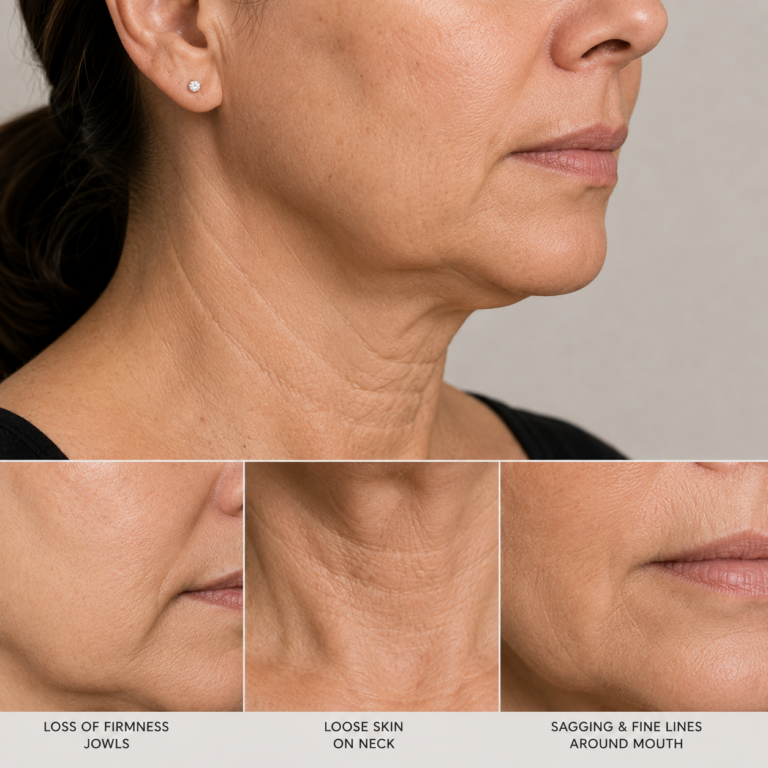
Skin Laxity & Skin Tightening in Agoura Hills
Skin laxity can show up gradually.
You may notice that your jawline looks softer, your cheeks feel less supported, the skin around your mouth looks looser or your neck and lower face no longer feel as firm as they once did.
This does not always mean you need more filler.
In many patients, the underlying issue is a combination of collagen loss, skin thinning, reduced elasticity, sun damage and structural changes that occur with aging.
At AIVI Aesthetics in Agoura Hills, we take a skin-first approach to skin laxity.
We evaluate where the laxity is coming from, how advanced it is, your skin quality, facial anatomy, treatment history, goals and tolerance for downtime before recommending a plan.
Depending on your needs, treatment options may include Vivace RF microneedling, Sculptra, Radiesse, CO2 laser resurfacing, CoolPeel®, microneedling, regenerative treatments or a combination approach.
The goal is not to make your face tighter at all costs.
It is to help your skin look firmer, healthier and more supported while preserving a natural appearance.
What Causes Skin Laxity?
Skin laxity develops for several reasons.
Common contributing factors include:
- Collagen loss
- Elastin breakdown
- Sun exposure
- Natural aging
- Facial volume loss
- Changes in bone and fat support
- Weight fluctuations
- Skin thinning
- Genetics
- Lifestyle factors
For many patients, laxity is not caused by one thing.
You may have skin laxity + volume loss + sun damage + texture changes at the same time.
That is why one treatment does not necessarily address the entire problem.
What Does Skin Laxity Look Like?
Skin laxity may appear as:
- Softening along the jawline
- Early jowling
- Loose skin around the lower face
- Crepey skin
- Reduced facial definition
- Thin or less resilient skin
- Neck laxity
- Less support through the cheeks
- Fine lines that look deeper because of collagen loss
Some patients notice a specific area.
Others simply feel that their face looks less firm or less defined than it used to.
What Is Non-Surgical Skin Tightening?
Non-surgical skin tightening refers to treatments designed to improve skin firmness, collagen support, texture, and mild laxity without surgery.
There is no single skin-tightening treatment that is right for everyone. The appropriate approach depends on what is contributing to the concern.
For example, loose or less-firm skin may be related to collagen loss, thinning skin, sun damage, facial volume changes, or a combination of these factors.
At AIVI Aesthetics, non-surgical skin-tightening options may include Vivace RF Microneedling, Sculptra, Radiesse, CO2 laser resurfacing, CoolPeel®, and other collagen-supporting treatments depending on your skin and goals.
For significant skin laxity or tissue descent, non-surgical treatments have limitations and cannot reproduce the results of a surgical facelift.
What Is the Best Treatment for Skin Tightening and Skin Laxity?
There is no single best treatment for every patient.
The right option depends on:
- Degree of laxity
- Skin thickness
- Collagen loss
- Facial volume loss
- Age-related structural changes
- Skin tone
- Downtime tolerance
- Treatment goals
At AIVI Aesthetics, treatment may include:
- Vivace RF Microneedling for collagen remodeling and mild laxity
- Sculptra for gradual collagen stimulation and support
- Radiesse for selected structural support and collagen stimulation
- CO2 Laser Resurfacing for texture, fine lines and selected skin tightening effects
- CoolPeel® for lighter resurfacing
- Microneedling for gradual collagen support
- Regenerative treatments for skin quality
For many patients, the most natural result comes from combining treatments strategically rather than relying on one procedure to do everything.
Best Treatments for Skin Laxity
-
Vivace RF Microneedling for Skin Laxity
RF microneedling is one of our primary treatment options for patients with mild to moderate laxity, collagen loss, enlarged pores and uneven texture. At AIVI Aesthetics, we use Vivace RF Microneedling. The treatment combines controlled microneedling with radiofrequency energy delivered into the skin. This creates a controlled healing response designed to stimulate collagen remodeling. Vivace RF Microneedling may be considered for: Early jawline laxity Mild lower-face laxity Neck laxity Fine lines Crepey texture Enlarged pores Acne scars Overall collagen loss It can be a useful option for patients who want gradual firming and skin-quality improvement without surgery. [Learn More About Vivace RF Microneedling →]
-
Sculptra for Collagen Loss and Facial Laxity
Sculptra is a collagen-stimulating injectable used to support gradual collagen production. It is different from traditional filler. Rather than simply adding immediate volume to one specific line, Sculptra is often used when facial aging includes generalized collagen loss, reduced support and gradual volume changes. Sculptra may be considered when you notice: Loss of firmness Facial hollowing Softening of facial contours Reduced cheek support Early laxity Generalized collagen loss Results develop gradually. This makes Sculptra appealing to patients who want a more subtle, progressive change rather than an immediate dramatic difference. [Learn More About Sculptra →]
-
Radiesse for Skin Support and Collagen Stimulation
Radiesse may also be used in selected patients to support facial structure and stimulate collagen. Depending on how it is used, it may help address: Loss of contour Reduced structural support Early laxity Collagen loss Skin-quality concerns Radiesse is not appropriate for every area or every type of laxity. Treatment should be based on anatomy and the role that volume and support play in your overall facial aging pattern. [Learn More About Radiesse →]
-
CO2 Laser Resurfacing for Skin Laxity
CO2 laser resurfacing is primarily a resurfacing treatment, but it may also support improvement in skin quality and selected areas of mild laxity through collagen remodeling. At AIVI Aesthetics, we use Tetra Pro CO2 technology. Depending on treatment intensity, CO2 resurfacing may help improve: Fine lines Crepey texture Sun damage Rough skin Enlarged-looking pores Overall photoaging CO2 resurfacing is especially useful when laxity occurs alongside significant surface texture changes. However, deeper structural laxity may require a different or combination approach. Learn More About CO2 Laser Resurfacing & CoolPeel®
-
CoolPeel® for Early Skin Laxity and Texture
CoolPeel® uses CO2 laser technology in a more superficial way than deeper resurfacing. It may be considered when early laxity occurs with: Fine lines Sun damage Rough texture Enlarged-looking pores Early crepiness Dullness CoolPeel® is generally better suited for surface-level rejuvenation and mild collagen support than significant loose skin. Explore CoolPeel® →
-
Microneedling for Early Collagen Loss
Traditional microneedling may help support collagen production when laxity is mild and the goal is gradual skin maintenance. It may be appropriate for: Early fine lines Mild texture changes Enlarged-looking pores Early collagen loss General skin-quality maintenance Microneedling does not provide the same level of energy-based collagen stimulation as RF microneedling, but it may still have a role in a long-term maintenance plan. [Learn More About Microneedling →]
Skin Laxity vs. Volume Loss
This is one of the most important distinctions in facial aging.
Skin laxity means the skin itself has become less firm or elastic.
Volume loss means there has been a reduction or redistribution of facial support.
You can have one, the other or both.
For example:
If your cheek has flattened because of volume loss, tightening the skin alone may not fully restore support.
If your face is already well supported but the skin looks crepey or loose, adding more filler may make the face look heavier without addressing the actual concern.
This is why we evaluate skin quality and facial structure separately.
[Explore Facial Volume Loss →]
Skin Laxity vs. Sagging
Patients often use the words “laxity” and “sagging” interchangeably.
They are related, but not exactly the same.
Mild laxity often refers to early loss of firmness and elasticity.
More advanced sagging may involve:
- Skin
- Fat pads
- Ligaments
- Muscle
- Bone support
- Gravity
Non-surgical treatments can improve selected cases of mild to moderate laxity.
But they cannot reproduce the results of a surgical facelift in patients with significant tissue descent.
We believe in being clear about that.
How Long Do Skin-Tightening Results Last?
No non-surgical treatment permanently stops the aging process.
Results depend on:
- Treatment used
- Skin quality
- Age
- Sun exposure
- Lifestyle
- Collagen response
- Maintenance
The goal is to improve the current condition of the skin and then maintain that improvement over time.
Long-term plans may include:
Sun protection + skincare + periodic collagen stimulation + maintenance treatments
Can Skin Laxity Be Prevented?
You cannot completely prevent natural aging, but you can support healthier aging.
Helpful strategies include:
- Daily broad-spectrum sunscreen
- Avoiding unnecessary UV exposure
- Consistent skincare
- Avoiding smoking
- Supporting overall health
- Maintaining a relatively stable weight
- Addressing collagen loss before laxity becomes more advanced
- Using maintenance treatments when appropriate
Preventative aesthetics is not about doing everything early.
It is about maintaining what you have thoughtfully.
Can Non-Surgical Treatments Replace a Facelift?
Not always.
Non-surgical treatments can help improve:
- Early laxity
- Collagen loss
- Skin quality
- Crepiness
- Mild lower-face softening
- Texture
But they do not physically reposition tissue in the same way surgery can.
If significant jowling or advanced laxity is present, a surgical consultation may provide a more meaningful result.
Our goal is not to convince every patient to stay non-surgical.
It is to help you understand what can realistically be achieved.
RF Microneedling vs. Sculptra for Skin Laxity
These treatments work differently.
| Treatment | Primary Goal | May Be Best For |
|---|---|---|
| RF Microneedling | Collagen remodeling within the skin | Mild laxity, pores, texture, fine lines |
| Sculptra | Gradual collagen stimulation and facial support | Generalized collagen loss, volume changes, reduced support |
| Radiesse | Structural support + collagen stimulation | Selected contour and support concerns |
| CO2 Resurfacing | Surface remodeling + collagen stimulation | Fine lines, crepiness, sun damage, texture |
| Microneedling | Gradual collagen support | Mild early changes and maintenance |
If your primary concern is skin texture and mild looseness, RF microneedling may make more sense.
If your concern includes loss of facial support and generalized collagen depletion, Sculptra may play a larger role.
Some patients benefit from both.
The Differences
Skin Laxity Around the Jawline
The jawline is one of the most common areas where patients notice aging.
A softer jawline may be related to:
- Skin laxity
- Facial volume changes
- Jowling
- Chin structure
- Lower-face anatomy
- Collagen loss
This is why simply treating the jawline itself may not always create the best result.
Sometimes improving cheek support, chin projection, collagen quality or skin firmness changes the appearance of the entire lower face.
Neck Skin Laxity
The neck can develop:
- Crepey texture
- Fine lines
- Loose skin
- Sun damage
- Reduced elasticity
Treatment may include RF microneedling, CO2 resurfacing, microneedling or other collagen-focused options, depending on the severity of the concern.
The neck generally requires a thoughtful approach because the skin differs from facial skin and can respond differently to procedures.
Crepey Skin and Skin Laxity
Crepey skin often reflects a combination of:
- Skin thinning
- Collagen loss
- Sun damage
- Reduced hydration
- Loss of elasticity
It can occur around the eyes, cheeks, neck and other areas.
Treatment may focus on improving skin quality and collagen support rather than adding facial volume.
Depending on the area, options may include RF microneedling, resurfacing, Rejuran or other regenerative treatments.
Our Skin-First Approach to Skin Laxity
You may come into AIVI saying:
“My face is sagging. I need filler.”
Maybe filler is part of the answer.
But maybe your primary issue is actually collagen loss and skin laxity.
Or maybe your facial support has changed and simply tightening the skin will not be enough.
That is why we do not choose a treatment based on one symptom.
At AIVI Aesthetics, our approach prioritizes:
- Skin health
- Collagen preservation
- Facial anatomy
- Natural-looking results
- Appropriate treatment selection
- Conservative volume restoration
- Realistic expectations
- Patient education
- Safety
- Long-term maintenance
The goal is not to make your face look artificially tight.
It is to help you look firmer, refreshed and still like yourself.
Frequently Asked Questions About Skin Laxity
There is no single best treatment. RF microneedling, Sculptra, Radiesse, CO2 resurfacing and microneedling may all have a role depending on whether the concern is primarily skin laxity, collagen loss, texture or structural volume loss.
RF microneedling may help improve mild to moderate laxity by stimulating collagen remodeling. Results vary depending on skin quality and degree of laxity.
Sculptra may help when laxity is related to generalized collagen loss and reduced facial support. It does not physically lift advanced loose skin like surgery.
Radiesse may provide selected structural support and stimulate collagen depending on how it is used. Whether it is appropriate depends on the area and the patient’s anatomy.
CO2 resurfacing can stimulate collagen remodeling and may improve selected cases of mild laxity, particularly when fine lines, crepiness and photoaging are also present.
Traditional microneedling may support gradual collagen production and mild skin-quality improvement. RF microneedling generally provides additional energy-based stimulation.
Mild lower-face laxity may improve with non-surgical treatments, but significant jowling usually involves deeper tissue changes that cannot be fully corrected without surgery.
RF microneedling is commonly performed as a series. The number of sessions depends on the severity of laxity, skin response and treatment goals.
There is no specific age. Treatment should be based on actual changes in your skin and your goals rather than starting simply because you reach a certain age.
Non-surgical treatments may improve mild to moderate laxity, but they cannot completely reverse all structural changes associated with aging. Realistic expectations are an important part of treatment planning.
There is no single best treatment for everyone. The appropriate option depends on the degree of skin laxity, collagen loss, skin quality, facial volume, treatment area, skin type, and desired downtime. At our nearby Agoura Hills clinic, options may include Vivace RF Microneedling, Sculptra, Radiesse, CO2 laser resurfacing, CoolPeel®, or other collagen-supporting treatments.
Skin Tightening Near Agoura Hills & the Conejo Valley
AIVI Aesthetics provides personalized non-surgical skin tightening treatments in Agoura Hills for patients throughout Westlake Village, Thousand Oaks, Calabasas, Woodland Hills, Malibu, and the Conejo Valley.
Because skin laxity can result from collagen loss, changes in skin quality, facial volume loss, or a combination of factors, we don’t recommend the same treatment for everyone.
Depending on your skin assessment and goals, treatment options may include Vivace RF Microneedling, Sculptra, Radiesse, CO2 laser resurfacing, CoolPeel®, or a combination approach.
Our goal is to improve skin firmness, texture, and overall skin quality while maintaining natural-looking results and realistic expectations about what non-surgical treatments can achieve.
EXCELLENT Based on 68 reviews
 Posted on Google
 Dimitra PapaspyridiI came to AIVI Aesthetics for Sculptra and a CoolPeel CO₂ laser treatment, and honestly, I couldn’t be happier with my results. What sets this place apart is Angelica’s level of expertise. She’s highly trained in advanced injectables and has such a thoughtful approach. She didn’t just treat one area; she looked at my whole face and created a plan that made everything look natural and balanced. I just look refreshed and glowing. I love that Angelica explains everything and really listens to what you want. I’m already booked for round 2 and cannot wait. If you’re considering investing in your skin, this is the place. You’re in the best hands. 🙌✨Posted on Google
 Brenda GarciaI recently got a Cool Peel treatment and I'm honestly blown away by the results. The whole experience was smooth from start to finish. Angelica was knowledgeable, explained everything clearly, and made me feel completely at ease. The treatment itself was surprisingly comfortable, much gentler than I expected. I would absolutely recommend Cool Peel to anyone looking to improve their skin texture and radiance without a long downtime. I'm already looking forward to my next session! TPosted on Google
 Diane BlindburyAngelica was so professional and informative on educating me on my options and recommendations. I will definitely be continuing to trust her and use her services.Posted on Google
 Jaime SandovalAbsolutely thrilled with my experience at Aivi! As a man who was initially self-conscious about seeking aesthetic procedures like Botox, I was a bit apprehensive before my first appointment. However, from the moment I walked in, I felt welcomed and at ease. Angelica Chang took the time to listen to all my concerns and answered every question I had, which really helped alleviate my anxiety. Her professionalism and warm demeanor made a world of difference. She explained the entire process clearly and made sure I was comfortable throughout. The results have exceeded my expectations! I couldn’t be happier with how natural everything looks. I genuinely feel more confident and refreshed. If you’re considering Botox, especially as a man, I highly recommend seeing her. You’ll be in great hands! Thank you for such a wonderful experience!Posted on Google
 Anita NeumannI had the CO2 Tetra Pro laser treatment done ten days ago. The results are phenomenal! The treatment itself was intense but not at all painful. The downtime was minimal! I actually attended a Gala event four days into my recovery!! I highly recommend this procedure. You will be amazed by the results. Thank you Angelica! I will see you soon for more treatments.Posted on Google
 Christine CalafatiI received the CO2 Deka Laser treatment 8 days ago and my skin has been transformed. Old deep acne scars, crept textured skin and fine lines have essentially been smoothed and almost non existent now. Highly recommend this procedure for anyone that wants a complete overhaul on their facePosted on Google
 Joseph SchultzVery happy with results! Angelica and Rio were incredibly helpful, put me at ease with the procedure (1st time!), very knowledgeable and answered all my questions I had. Can’t wait to come back.Posted on Google
 Gwyn SwigAngelica makes sure you are comfortable and takes her time to help you understand what you want.Verified by TrustindexTrustindex verified badge is the Universal Symbol of Trust. Only the greatest companies can get the verified badge who has a review score above 4.5, based on customer reviews over the past 12 months. Read more
Ready to Improve Skin Firmness and Collagen?
If you’re ready to improve mild skin laxity, support collagen, soften crepey texture and restore a firmer, healthier-looking appearance, we’re here to help.
Schedule your personalized consultation at AIVI Aesthetics to learn whether Vivace RF microneedling, Sculptra, Radiesse, microneedling or CO2 laser resurfacing and CoolPeel® may be appropriate for your skin and facial aging concerns.
Call us directly at (818) 851-9900 or contact us. We’ll evaluate your skin quality, collagen loss, facial support and degree of laxity, answer your questions and develop a customized treatment plan based on your goals and comfort with downtime.
We proudly welcome patients from Agoura Hills, Westlake Village, Thousand Oaks, Calabasas, Oak Park, Newbury Park, Camarillo, Malibu, and communities throughout the Conejo Valley seeking personalized, medically guided skin tightening and collagen-stimulating treatments.